Stale Ends, Warm Spoon: A Midweek Sourdough Pudding for Dark November Nights
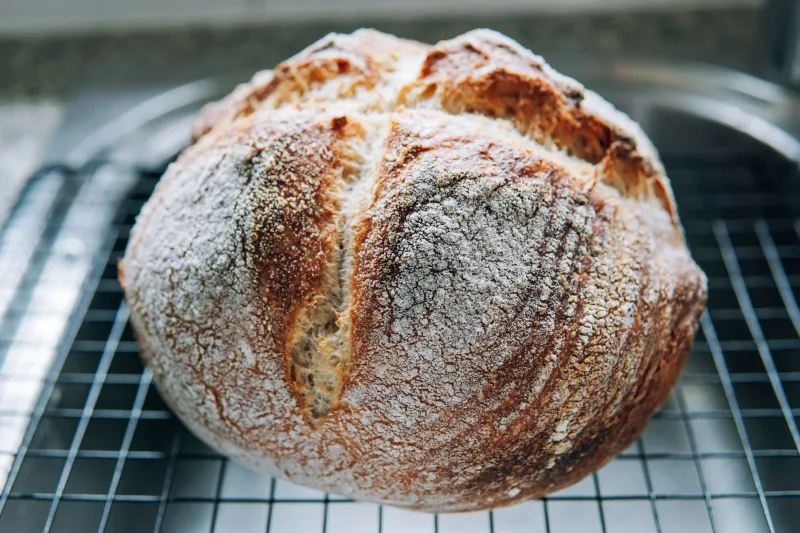
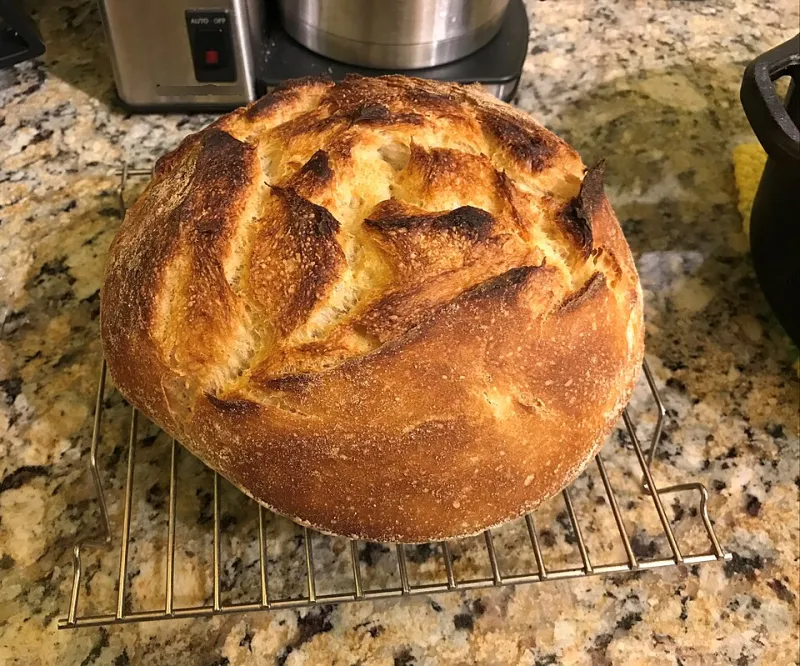
November has a way of making the last slices of a loaf look like a chore. The middle goes first — sandwiches, toast, a hasty slice under the grill — and what remains is a heel, a crust, a slightly dry end that nobody quite claims. At Morena's Bakehouse we would rather those bits became something warm than something guilty. So this is less a strict recipe and more a midweek habit: keep a bag of sourdough ends in the freezer, then turn them into a bread-and-butter pudding when the evening turns dark and the kettle is already on.
It is thrifty, yes. But it is also generous. A pudding made from ends is the sort of thing you can carry next door in a tea towel, still warm, and not make a fuss about. That feels right for November.
Start a heel bag (and stop apologising for it)
Every sourdough loaf has two heels, and a week of loaves has more than you think. Instead of leaving them on the board to fossilise, drop them into a freezer bag as they appear. Slice them first if they are chunky; smaller pieces thaw faster and layer more neatly. Write the date on the bag if you are the sort of person who likes order, and use the contents within about three months. You are not saving scraps. You are building the beginning of a pudding.
A mix of crusts and crumb is good. Very dark crusts bring flavour and chew; softer ends bring body. If a piece is already rock-hard, don't panic — cut it into cubes and let the custard do the softening. If it is damp or has picked up a smell, compost it. This is thrift, not a dare.
The formula: bread, custard, a little patience
For a pudding that serves six — or four hungry people and two neighbours — use roughly 200–250g of thawed sourdough ends. You want enough to fill a small oven dish in loose layers, not to pack it tight.
For the custard, warm 400ml whole milk and 100ml double cream with a split vanilla pod or a teaspoon of vanilla extract. In a jug, whisk three eggs with 50g caster sugar until pale. Pour the warm milk over the eggs slowly, whisking as you go. Add a good grating of nutmeg and a pinch of salt. That is the whole custard. No tempering drama, no stand mixer.
Butter the dish. Butter each slice or cube of bread on one side — salted butter, please — and layer it butter-side up. Scatter a handful of sultanas or raisins between the layers. Pour the custard over, press the bread down gently, and leave it to sit for 20 minutes before baking. That rest is the difference between bread floating in custard and bread that has drunk it up.
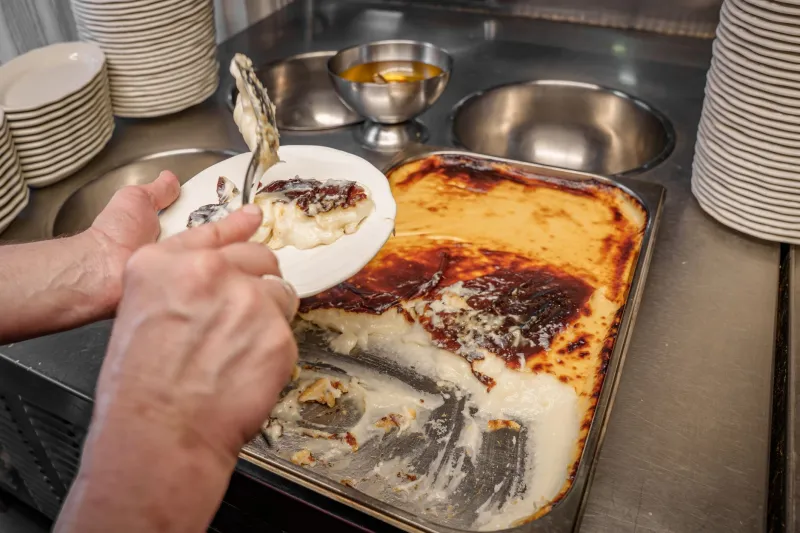
Bake at 160°C fan/180°C conventional for 35–40 minutes, until the top is golden and the custard is just set with a slight wobble. If it browns too fast, cover with foil. Let it sit for 15 minutes before spooning. It will be hotter than it looks.
Make it yours without making it complicated
The formula takes additions well. A tablespoon of marmalade spread over the buttered bread gives a bitter-orange edge that cuts through the custard. A chopped Bramley apple, softened first in a pan with a little sugar, adds a seasonal sharpness. Dark brown sugar in place of caster makes it more treacle-ish; a handful of chocolate chips makes it a Friday pudding rather than a Wednesday one.
What you do not need is a shopping list. This is a recipe for the week after the loaf has done its main job. If you have dried fruit, use it. If you have none, cinnamon and a little extra sugar will do. If you have leftover custard from Sunday, use that instead of making fresh — just warm it slightly so it pours.
A pudding for the middle of the week
Wednesday is a good day for this. The week has lost its newness, the evenings are properly dark, and nobody expects a project. Thaw the heel bag in the morning, or leave it in the fridge overnight. Build the pudding after work, slide it into the oven while you eat something else, and let it cool while the kettle boils.
It also travels well. Cut it into squares, wrap the dish in a tea towel, and take it to a neighbour who has had a long week. Bread-and-butter pudding is not a showstopper. It is a warm spoon and a sit-down. That is usually what people need in November.
The small rules worth keeping
Use sourdough you actually like. A very sour loaf makes a very sour pudding; if your bread is bold, balance it with a little more sugar or a spoon of jam. Don't skip the rest before baking. Don't drown the bread — it should look damp, not swimming. And don't apologise for the crusts. They are the best bit, and they are the reason this pudding has any texture at all.
At Morena's Bakehouse, we like a loaf that earns its keep right to the last end. This is one small way to make sure it does.