One Loaf, No Theatre: Sorting Christmas Eve Sourdough on the 23rd
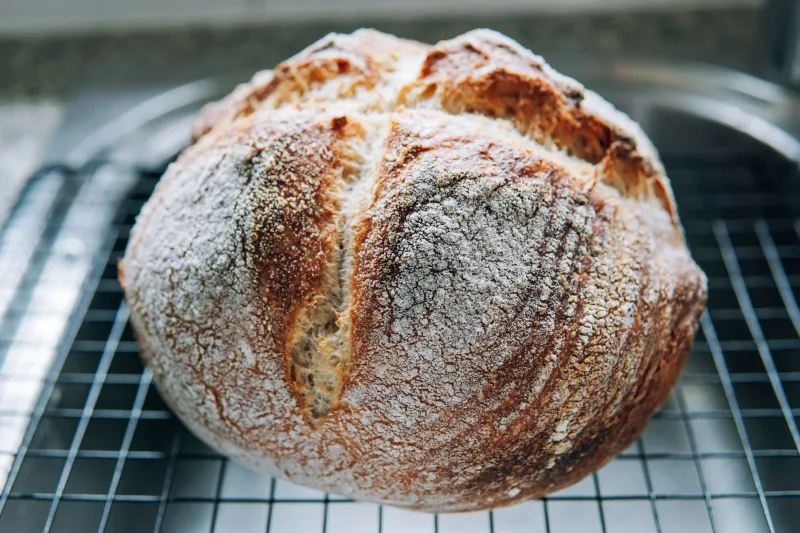
Christmas Eve has a habit of arriving with a to-do list attached. There are sprouts to deal with, beds to make up, maybe a last dash to the shop for cling film. What there should not be, if we can help it, is a sourdough performance. No hovering over a banneton like a nervous understudy. No checking the crumb every four minutes. Just one reliable loaf, mixed on 23 December 2026, left to do its slow thing in the fridge, and baked first thing so the rest of the day can go gently sideways in the usual way.
This is the anti-spectacle loaf. It is not here to win a competition or be photographed from twelve angles. It is here for toast while the kettle boils, for thick slices under cheese and chutney, and for a plate taken next door with a note that says: made too much, thought of you. In a British December, that is worth more than a decorative centrepiece.
Why one loaf is the right amount
A Christmas Eve bake can easily become a second job. Once you start planning three loaves, two flours and a seeded star, you have invited stress into a day that is already doing a lot. One country loaf is enough. It gives you breakfast on Christmas Eve, something to set out for picky visitors, and a fallback on Boxing Day when the fridge is full of things in foil.
It also fits around real life. You mix in the afternoon of the 23rd, put the dough to bed in the fridge, and bake on the morning of the 24th. The oven is on while you are still in slippers. By the time anyone asks what smells so good, the loaf is cooling and you can look mildly mysterious rather than mildly panicked.
The quiet formula
This makes one decent-sized loaf, around 800g baked. It is deliberately forgiving: mostly white flour for a soft crumb, a little wholemeal for flavour, and a hydration that behaves in a domestic kitchen.
- 500g strong white bread flour
- 100g wholemeal bread flour
- 360g water, lukewarm
- 100g active starter, bubbly and not sulking
- 12g fine sea salt
Feed your starter on the morning of 23 December. If it usually takes six hours to peak, feed it at breakfast. If it is slower in the cold, give it a warm spot near the boiler, but not on top of it. You want it lively, not stressed.
The 23 December timeline
At about 2pm, mix the flours and water and leave it for 30 minutes. Add the starter and salt, squidge it together with wet hands, and cover. Over the next three hours, give it three or four sets of folds, spaced about 45 minutes apart. You are not kneading for dear life. You are just helping the dough gather itself.
By early evening it should feel puffy and a bit more confident. Shape it into a round, place it seam-side up in a floured banneton or a lined bowl, and cover. Then clear a shelf in the fridge. This is the bit that trips people up in December: the fridge is often packed with things that need to be cold and things that need to be eaten. Raw dough should go below ready-to-eat food, in a lidded container or a bowl covered with a shower cap, so it does not touch anything else. If space is tight, a deep plastic box on the bottom shelf is your friend.
Leave it there overnight. Twelve to fourteen hours is a good window. If your fridge is very cold, it may need sixteen. If it is crammed and warm, check earlier. The dough should look risen, slightly domed and soft to the touch, not wildly inflated.
Baking before the day gets loud
On Christmas Eve morning, heat the oven to 240°C conventional or 220°C fan with a Dutch oven inside. Give it a good 30 minutes. Take the dough straight from the fridge, tip it onto baking paper, score one simple slash and lower it into the hot pot. Lid on for 20 minutes. Then lid off, turn the oven down to 220°C conventional or 200°C fan, and bake for another 20 to 25 minutes until deeply golden.
No Dutch oven? Use a sturdy tray, put a small roasting tin of hot water on the shelf below, and bake the loaf on baking paper. It will be a little less dramatic but perfectly good. The point is not oven theatre. The point is bread.
Let it cool on a rack for at least an hour, even though every instinct says cut it now. Then wrap it in a tea towel. It will keep nicely for toast on Christmas Day and sandwiches after.
The neighbourly drop-off
Cut a couple of doorstep slices while the loaf is still faintly warm, wrap them in greaseproof, and take them to whoever on your street might be on their own or pretending they are fine. This loaf is not a grand gesture. It is just bread, made early enough that you had the time to share it. That is the whole trick of Christmas Eve: do the quiet thing first, then let the day be as busy or as still as it needs to be.