Kettle On, Cake Out: Hosting a Slice-and-Share Sunday for Your Street
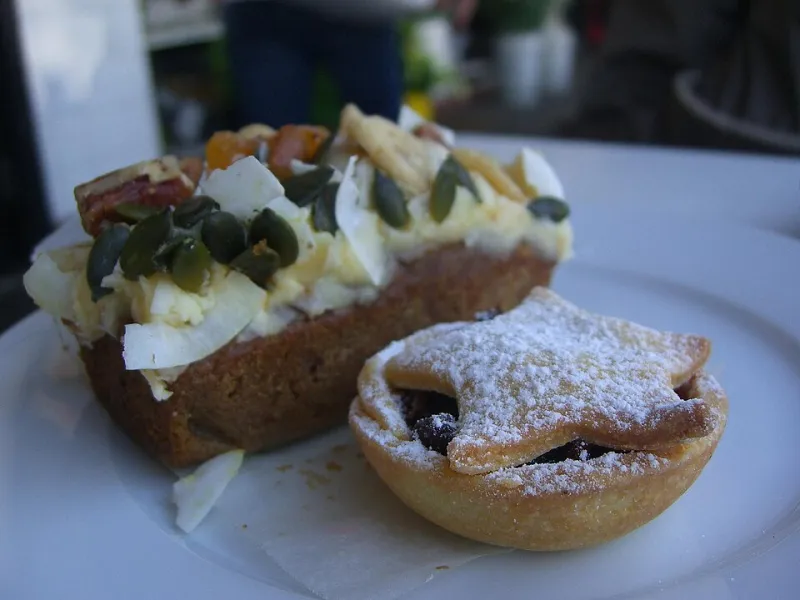
Photo: Alpha, CC BY-SA 2.0, via Wikimedia Commons
There's a short window in early November when the street goes quiet. Curtains drawn at half four, wheelie bins out in the dark, everyone technically neighbours and practically strangers. It happens every year, and every year it takes almost nothing to undo: a table, a pot of tea, and three cakes cut into squares.
We're not talking about a party. We're talking about a slice-and-share afternoon — ninety minutes on a Sunday, an open door, and cake that doesn't mind being cut small.
Why cake, and not another bread club
Bread clubs are lovely. We've written about them and we mean it. But they ask for commitment: a Saturday morning, a starter to keep alive, a certain level of confidence with dough. A cake afternoon asks for a plate and a bit of nerve.
There's also something about cake that lowers the stakes. Bread is a project. Cake is a gesture. Nobody stands in your hall judging your crumb structure — they're too busy working out whether there's parkin left.
The invitation people actually answer
Keep it small and specific, and put it on paper. A handwritten card through six to ten doors on your side of the street beats a group chat every time, because half the people you want to invite aren't in the group chat and never will be.
Three lines are enough:
Cake at number 14, Sunday 15th, 2 till 4. Come for twenty minutes or stay the whole time. Bring nothing, or bring a plate if you fancy it.
A window rather than a start time is the secret. "Arrive at 2pm" sounds like a service; "between two and four" sounds like an afternoon. Say what to do about shoes, dogs and children. And follow up with a knock on the door for the neighbours you've never actually met — the card is easy to ignore, a person less so.
Building the cake table around ginger, apple and treacle
November baking should be dark, sticky and generous. Three bakes will comfortably feed fifteen people, and all of them cut well, keep well and need no cream.
A tray of parkin. Oaty, treacly, better on the third day than the first, and it cuts into twenty-four squares without crumbling. Make it on Thursday and it'll be at its best by Sunday.
An apple and cinnamon traybake. One tin, sixteen squares, and a good home for the apples a neighbour inevitably presses on you in October. A little demerara on top for crunch.
A dark treacle gingerbread loaf. Sliced thick, no icing, excellent with strong tea. This is the one that makes the kitchen smell like the whole idea of November.
Add one plain, cautious bake — shortbread, or a simple Victoria sandwich — for anyone wary of spice. A jug of milk, a pot of tea, a jug of squash, and you're done. Set the table by the window if you can; light in November is precious and daylight makes people linger.
Labels, allergies and the awkward bits
Do the labelling, and do it before anyone arrives. A small card in front of each cake with the name and a plain list of what's in it takes ten minutes and saves a dozen awkward conversations.
- Write allergens clearly — nuts, dairy, egg, wheat — and note if a bake has none.
- Keep a nut bake at the far end of the table with its own knife and its own plate.
- Offer one gluten-free option, but don't turn it into a project. A decent bought flapjack or a shop-bought brownie on a pretty plate is absolutely fine.
- Don't ask guests to declare anything. Label, offer, and let people choose.
Keep the servers separate, keep a spare knife on the table, and have a roll of kitchen paper within reach. That's the whole system.
The logistics nobody warns you about
Chairs are usually the bottleneck. Borrow two, and don't be shy about it — asking to borrow a chair is the second-best way to start a conversation with a neighbour. Open the front room, put a spare bin bag by the door, and accept that a stranger's coat will end up on your bed.
Give the person who knows nobody a job. "Would you mind doing the tea?" turns a wallflower into a host in one sentence, and it means you aren't chained to the kettle while your own party happens in the next room.
Two o'clock to four o'clock is the right slot in November. People can walk home in daylight, it doesn't collide with lunch or dinner, and it gives you a natural end. If the last guests are still there at half five, that's a success, not a problem.
If the week runs away with you
Some Novembers get away from all of us. If you've invited people and then realised you have a work deadline, a poorly child or simply no time to bake, order in and don't apologise for it. A cake on a stand looks exactly the same whether you made it or not.
Our bakehouse takes whole-cake pre-orders with forty-eight hours' notice — parkin, apple traybakes, gingerbread loaves, all of them cut into portions and boxed if you'd rather not do the slicing. Mention any dietary needs when you order and we'll label the box for you. Collect on the Friday or the Saturday morning before, and Sunday is nothing but the kettle and the door.
Nobody remembers the cake
Here's the thing we've learned from a decade of counter conversations: nobody remembers what they ate. They remember that number 14 had the light on, that someone's teenager carried chairs across the road, that the woman from the end house turned out to be a retired nurse with the best stories on the street.
The cake is just the excuse to open the door. Bake something dark and sticky, put the kettle on, and let November do what it does.