When the Radiator Wins: Keeping a Sourdough Starter Happy Through a British November
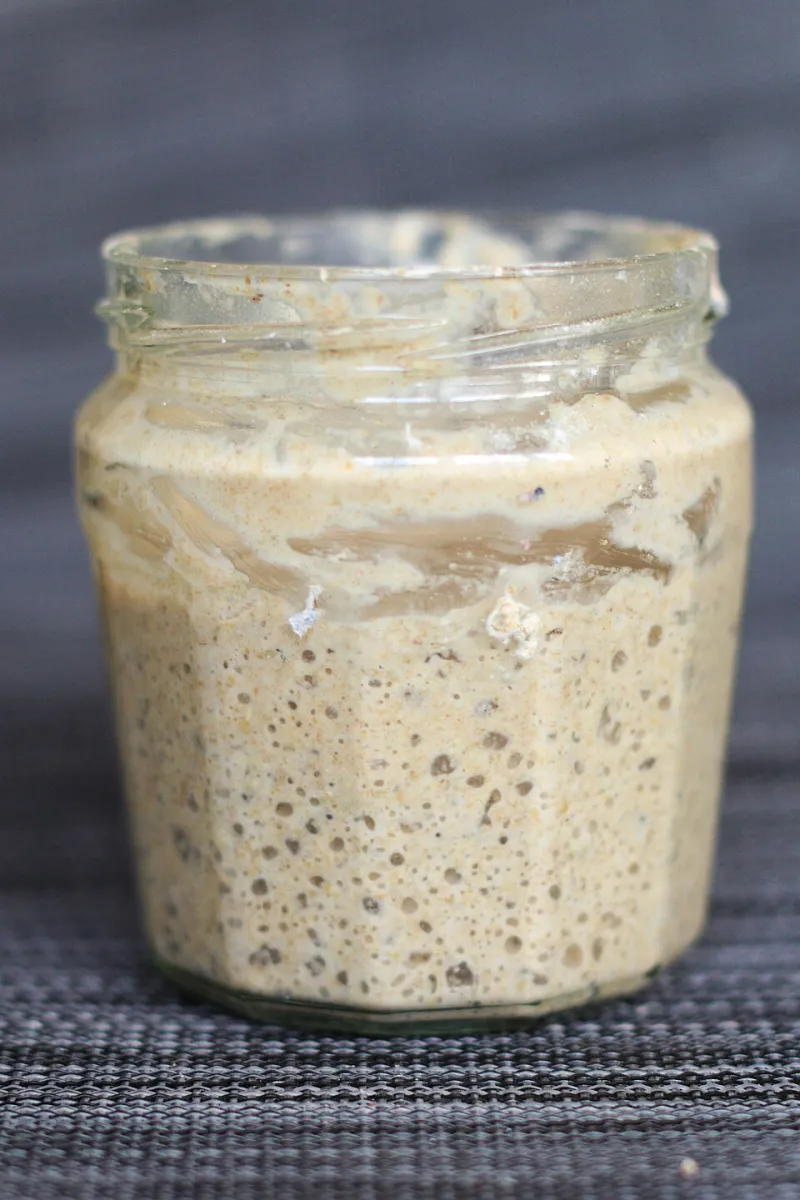
Photo: Jeuwre, CC BY-SA 4.0, via Wikimedia Commons
November has a habit of arriving all at once. One week you're finishing the last of the tomatoes on the windowsill; the next it's dark by half four, the radiators are clicking, and someone in the house has already started humming a Christmas song under their breath. Your sourdough starter, meanwhile, has no idea what has happened.
If your jar has gone quiet, sulky or suddenly volcanic, you're in good company. Every November a wave of slightly worried messages lands at the Morena's counter, mostly from people whose starter has been cheerful since May and has now decided to think about things. Here's how we handle it in the bakery, scaled down for a normal kitchen with a normal kettle and an unreasonable quantity of flour in the cupboard.
Your starter doesn't know it's November
It doesn't own a calendar. It only knows temperature, and a British kitchen in November can swing from 15°C at six in the morning to 23°C an hour after the heating comes on. That's a ten-degree rollercoaster, twice a day, and it explains a lot: why a starter that doubled in four hours in July now takes eight, and why it sometimes races past its peak while you're on a work call, then collapses into a puddle of nail-varnish-smelling goo. Neither is a disaster. Both are information.
Aim for a dough temperature of about 24–26°C and a starter that sits somewhere similar. Below 18°C everything slows to a crawl; above 28°C the yeast gets frantic and the bacteria get sharp and boozy. The whole job in November is nudging things back into that middle band.
The fridge is a diary you can eat
If you bake once a week, the fridge is your friend. Feed your starter, leave it on the counter for two or three hours until it has domed nicely, then park it in the back of the fridge where the temperature is steadiest. It will sit there happily, gathering a little grey liquid on top, until you need it.
Take it out roughly 24 hours before you want to bake and give it two feeds — the first at roughly 1:2:2, the second once it has risen and fallen. Use lukewarm water, not hot, and give the second feed a little wholemeal or rye flour for a bit of grunt. Bakers who bake twice a week can often keep the jar on the counter instead, but feed it daily and feed it generously while the heating is on, or it will run out of steam by Thursday.
Warm spots that aren't the radiator
Standing a jar directly on a radiator is the single most common way to cook a starter rather than wake it up. If it feels hot to your hand, it's too hot for the jar. Better options:
- The airing cupboard. Usually a steady 22–25°C. Check with a cheap thermometer before you trust it.
- The top of the fridge. Gently warm from the motor, and out of draughts.
- The microwave, door shut, with a mug of just-boiled water alongside. Replace the water when it cools. Do remember the jar is in there before you reheat last night's curry.
- The oven with only the light on. Some ovens hover at 25°C this way. Test it on a day when you're not baking.
Feeding tweaks that actually help
Three small changes do most of the work. First, use water at about 26–28°C — warm enough to feel neutral on your wrist. Second, mix your starter a little thicker than you would in summer; a stiffer batter copes better with a cold kitchen and gives you a clearer rise to read. Third, put an elastic band round the jar at the starting level so you can see what's really happening rather than squinting and hoping.
If the starter is sluggish, don't feed it harder. Feed it smaller and more often: keep 20g, feed 20g flour and 20g water, and repeat every 12 hours until it's doubling reliably. If it's over-eager and collapsing between feeds, do the opposite — bigger ratios, cooler water, or a short spell in the fridge.
When the heating clicks on mid-proof
This is the classic November problem. You mix your dough at 8am in a cool kitchen, the heating kicks in at 10, and by half twelve the dough is frantic and sticking to the bowl. Stop watching the clock and start watching the dough. A straight-sided tub helps enormously — mark the level, and aim for a rise of around 50 to 70% rather than a doubling.
If things are moving too fast, get the dough into the fridge for a cold retard of 8–14 hours and bake from cold. If they're moving too slowly, move the bowl somewhere warm and give it another hour before you panic. Poke the dough with a floured finger: if the dent springs back slowly and stays slightly, it's ready; if it fills in instantly, give it more time.
A starter station for the street
Here's something we're trying this month at the bakery, and it's easy to copy on your own road. We keep a tray on the counter on Sunday mornings with small jars of active starter — about 100g each, dated and labelled with simple feeding instructions. Bring a jar, take a jar. No charge, no ceremony, no need to explain yourself.
We've started a group chat for the street too, mostly so people can ask whether their starter is meant to smell like that at eleven at night, and so anyone with a glut can offer spare flour or a spare jar before a bake day. The aim is simple: nobody's Christmas bake goes flat because they couldn't get hold of a lively starter in the darkest week of the year. If you'd like to start a station on your own street, we'll happily hand over a jar and a photocopied set of instructions to get you going.
Before you blame yourself
Quick checks, in order: is the room colder than you think? Is the water hot enough? Has the flour gone stale? Is the jar actually clean? Has it been more than a fortnight since the last proper feed? Nine times out of ten it's one of those, and a warm spot plus a couple of small feeds sorts it out within a day.
Sourdough in November is less about skill and more about paying attention — to the radiator, to the jar, to the dough. Get those small things right and the bread takes care of itself, right through to the Christmas table.